

The Speak No Evil Remake Happened Because We Let It
A perfectly good Danish movie has been remade for no good reason.


Four years ago, director Bong Joon-Ho spoke about overcoming the aversion towards subtitles that have kept Anglophone audiences, especially Americans, cloistered in a bubble. “Once you overcome the one-inch barrier of subtitles”, he said through his translator, “you will be introduced to so many more amazing films”.
After Parasite made history as the first foreign language film to win Best Picture at the Oscars, it’s like we were on the brink of change: an era where foreign-language films could be embraced by English-speaking audiences. We no longer had to remake every foreign-language film, stripping it of its original identity, to cater to the comfort of American audiences.
But four years later, the remake industry is flourishing. Coda, the American remake of the French La Famille Bélier, won Best Picture at the Oscars just two years after Parasite, and most recently, the critically acclaimed Danish film Speak No Evil (2022) — which is a mostly English language film! — has already suffered the Hollywood remake treatment, just two years after its release.
Earlier this month, I saw both. Don’t get me wrong: the 2024 Blumhouse remake is a charming and entertaining film, and I will be seated for anything involving James McAvoy. But it also ends up softening the movie to the extent that it ends up completely stripped of its original meaning and impact.
Spoilers for Speak No Evil (2022) & Speak No Evil (2024) follow. You've been warned!
The original version of Speak No Evil follows Danish family Bjørn (Morten Burian), Louise (Sidsel Siem Koch) and their daughter Agnes (Liva Forsberg), who meet Dutch family Patrick (Fedja van Huêt), Karin (Karina Smulders), and their son Abel on a holiday in Italy. Patrick and Karin invite their new Danish friends to visit them at their remote house in the Netherlands, and well, it’s safe to say that things don’t end well for the guests. To be more specific, the Dutch couple cut Agnes’ tongue in full view of her parents, who end up stripped naked and stoned to death on a beach.

The 2024 Blumhouse remake is decidedly more American. The first two thirds of the movie mirror the original, even opening with the same shaky POV shot from a car as it rolls down a dark road. But Director James Watkins also completely overhauls the film’s ending in a way that not only makes the rest of the movie lose its impact, but its entire point.
Watkins’ version follows the straight-laced American family Ben (Scoot McNairy), Louise (Mackenzie Davis) and their daughter Agnes as they cross paths with the Brits Paddy (James McAvoy) and Ciara (Aisling Franciosi) and their son Ant in Italy. The same plot points unfold, with Ben and Louise opting to visit the Brits at their home in the Midlands.
But there’s so much about the new movie that doesn’t work. First, turning the Danes into Americans because of what the original film wanted to say about trappings of European civility: specifically, a particular class of Danish people. One thing that Americans don’t struggle to do is advocate for themselves, so it’s hard to believe that this all-American family would hang around indulging social mores when they see that something is off.

But it’s in its final act that the remake literally loses the plot. In both films, the visiting family realise they’re not safe and haul into their car in the middle of the night. They then go back for their daughter’s treasured stuffy, talking it out with the host family, and end up hanging around. This is when the audience knows it’s over for the visiting couple — their obsessive politeness is going to lead to their demise.
It should be mentioned that in the original movie, the Danes are eerily compliant to their fate. We see the horror of Agnes having her tongue cut out completely drain her parents of any will to push back. But when the Brits turn on the Americans, they fight back. With the help of some encouragement from Louise, who tells her husband to “fight for [his] family”, we’re treated to a lengthy sequence where the Americans make use of an array of weapons including box cutters, acid, homemade Molotov cocktails to save the day.
There’s a moment in the original film where after his daughter is mutilated and moments away from his death, a pitiful Bjørn asks Patrick why he’s doing what he’s doing, to which he chillingly replies, “because you let me”. It’s an affecting line that gestures to all the times that the Danes’ better instincts were quashed by the constant imperative to be polite.
But deciding to include the same line in the remake, seeing as the Americans fight like hell against their captors, feels hollow and misplaced. The beauty of the original is that its final act perfectly calls back to all of the moments before it. But in Americanising the ending, the whole thing falls apart.
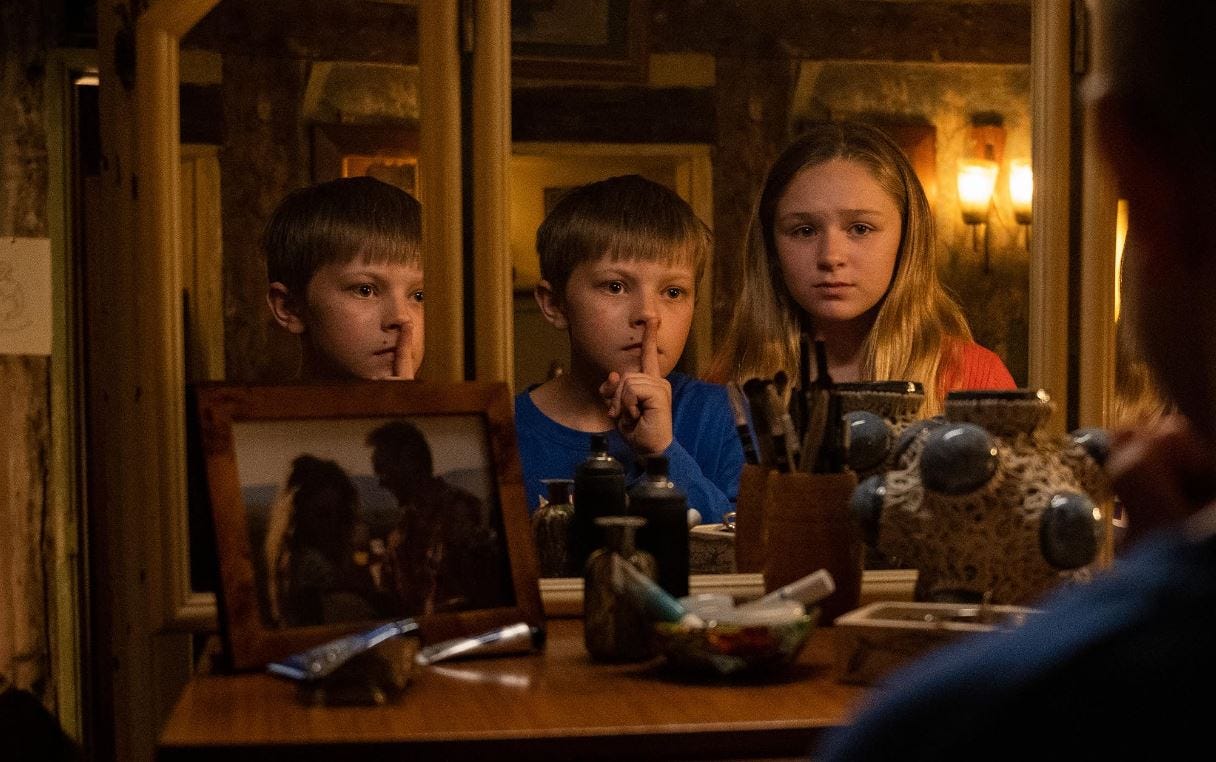
Christian Tafdrup, who directed and co-wrote the original, has been open about how much of a flop the remake has been. Politely, of course!
“I don’t know what it is about Americans, but they are brought up for a heroic tale, where the good must win over the bad, and this version of the film cultivates that,” he told Kulturen.
“I found that they have made a wildly entertaining, effective, well-acted version of my original film. But it might not be that dangerous either. When I saw the film yesterday, I could see that they would never succeed with a film where the characters are stoned to death, as they do in our film. These people must fight for their family and defeat the bad guys.
“It is a kind of happy ending, and it is so deep in their culture that America must be able to handle it all.”

I can't help but think of how much is lost in remaking perfectly good cinema and TV. Not only will fewer people gravitate to foreign movies, but remakes take resources away from those wanting to say something new.
If we treat Americans like they can only understand a story that is happening to Americans, then that’s what they’ll come to expect. It’s a vicious cycle: by offering them what they’re expected to enjoy, the lack of choice will mean it’s all they know.
It shouldn’t be that hard for Americans to relate to a couple of characters from Denmark. In a world that is more connected and globalised than ever, there’s really no reason for a Speak No Evil remake to exist, particularly a remake as clumsy as this one.
Rachel Choy is a cat lover, journalist, and co-founder of The Offcut. You can see how cute her cats are on @thekiwicouple.